How Tall Should a Cat Tree Be? Size Guide by Age & Breed

Most adult cats do well with a 48–72 inch (122–183 cm) cat tree. That height is tall enough to satisfy climbing and perching instincts, yet short enough to fit most living rooms without touching the ceiling.
Of course, the best height depends on more than age alone. A kitten, a senior Maine Coon, and a pair of young Bengals do not need the same tree. Ceiling height, floor space, platform spacing and base width all affect whether a tree feels safe and usable. Below is a practical guide to choosing the right cat tree height for your cat, your room and your business.
Cat tree height by age, size and household
Use this table as a starting point, then adjust for your cat's mobility and your ceiling height.
| Cat type | Recommended height | Why this range works |
|---|---|---|
| Kittens under 6 months | 24–36 in / 61–91 cm | Coordination is still developing; shorter drops and low platforms reduce fall risk. |
| Adult cats (most breeds) | 48–72 in / 122–183 cm | The sweet spot: climbing, scratching, perching and napping in a compact footprint. |
| Senior cats (10+ years) | 24–40 in / 61–102 cm | Older joints need shallow steps or ramps; wide platforms matter more than height. |
| Large breeds (Maine Coon, Ragdoll, Norwegian Forest) | 60–72+ in / 152–183+ cm | Big cats need bigger platforms, thicker posts and a heavy base; height follows stability. |
| Multi-cat households | 60–72 in / 152–183 cm | Vertical territory helps cats share space and reduces floor-level conflict. |
Kittens: start low and grow
Kittens are fearless, but their landing skills are not fully developed. A 24–36 inch tree with closely spaced platforms lets them practice climbing without risking a long fall. Look for a model with a low condo or tunnel on the ground level so they have a safe place to retreat. You can upgrade to a taller tree after they are about a year old and confident on the first one.
Senior cats: easy access beats height
As cats age, jumping becomes harder. A 24–40 inch tree with ramps, wide perches and a ground-level bed is usually more appealing than a tall tower they can no longer reach. If your senior cat already loves height, choose a design with intermediate steps so they never have to jump more than 12 inches at once.
Large breeds: stability first, height second
Large breeds like Maine Coons and Ragdolls can weigh 15–20 lb or more. A tall tree with a narrow base will tip when they leap. For these cats, choose a 60–72 inch tree with a broad, weighted base, platforms at least 16 inches across, and posts thick enough to withstand a full-body stretch. At PawMivo, our large-breed towers use reinforced bases and extra-thick sisal posts for exactly this reason.
Multi-cat homes: vertical space reduces tension
In homes with two or more cats, a 60–72 inch tree creates multiple "levels" of territory. Each cat can claim a different perch, which helps reduce competition for the same spot. Choose a tree with more than one sleeping area and several scratching posts so cats do not have to share the same feature at the same time.
Ceiling height and clearance
Standard ceilings are about 96 inches (244 cm). A 72 inch tree leaves roughly two feet of clearance, which is usually enough for a cat to sit upright on the top perch. If your ceilings are 84–90 inches — common in apartments — a 52–60 inch tree may look and feel better. Floor-to-ceiling models can work, but only when they have a tension rod or ceiling mount; otherwise the top can shift when a cat jumps.
Platform spacing and base width
Height only works if the cat can move between levels safely. We recommend platform spacing of 12–16 inches (30–40 cm), with platforms slightly offset so cats climb in a spiral rather than a straight vertical line. Every platform should be large enough for the cat to turn around and lie down. For large breeds, 16 inches is the practical minimum.
Base width is just as important. A good rule of thumb is that the base should be at least as wide as the tree is tall, measured diagonally. A 72 inch tree should have a base footprint of roughly 24 x 24 inches or more, or a weighted bottom panel, to prevent tipping.
Where to place the tree
Cats want to see the room while keeping an escape route. A spot near a window is ideal because it adds outdoor viewing to the height advantage. Avoid placing a tall tree above heat vents, in narrow hallways or against a wall where the cat can be cornered. Putting the back of the tree against a wall or in a corner also adds stability.
Frequently asked questions
How tall should a cat tree be for most adult cats?
Most adult cats do well with a 48–72 inch (122–183 cm) cat tree. This range gives enough climbing, perching and scratching space while fitting standard ceiling heights.
Is a taller cat tree always better?
Not necessarily. Stability, platform spacing and the cat's age or mobility matter more than raw height. A wobbly tall tree is less useful than a shorter, stable one.
What height cat tree is best for a kitten?
Kittens under six months usually do best with a 24–36 inch (61–91 cm) tree. Their coordination is still developing, so lower platforms and short drops help prevent falls.
Can a cat tree be too tall for a senior cat?
Yes. Senior cats often prefer 24–40 inch (61–102 cm) trees with wide platforms, shallow steps or ramps. Joints and balance decline with age, so easy access is more important than height.
How much ceiling clearance does a cat tree need?
Leave at least 12–18 inches (30–46 cm) between the top perch and the ceiling. For a standard 96 inch ceiling, a 72 inch tree leaves about two feet of clearance.
Buying cat trees for retail, private label or wholesale?
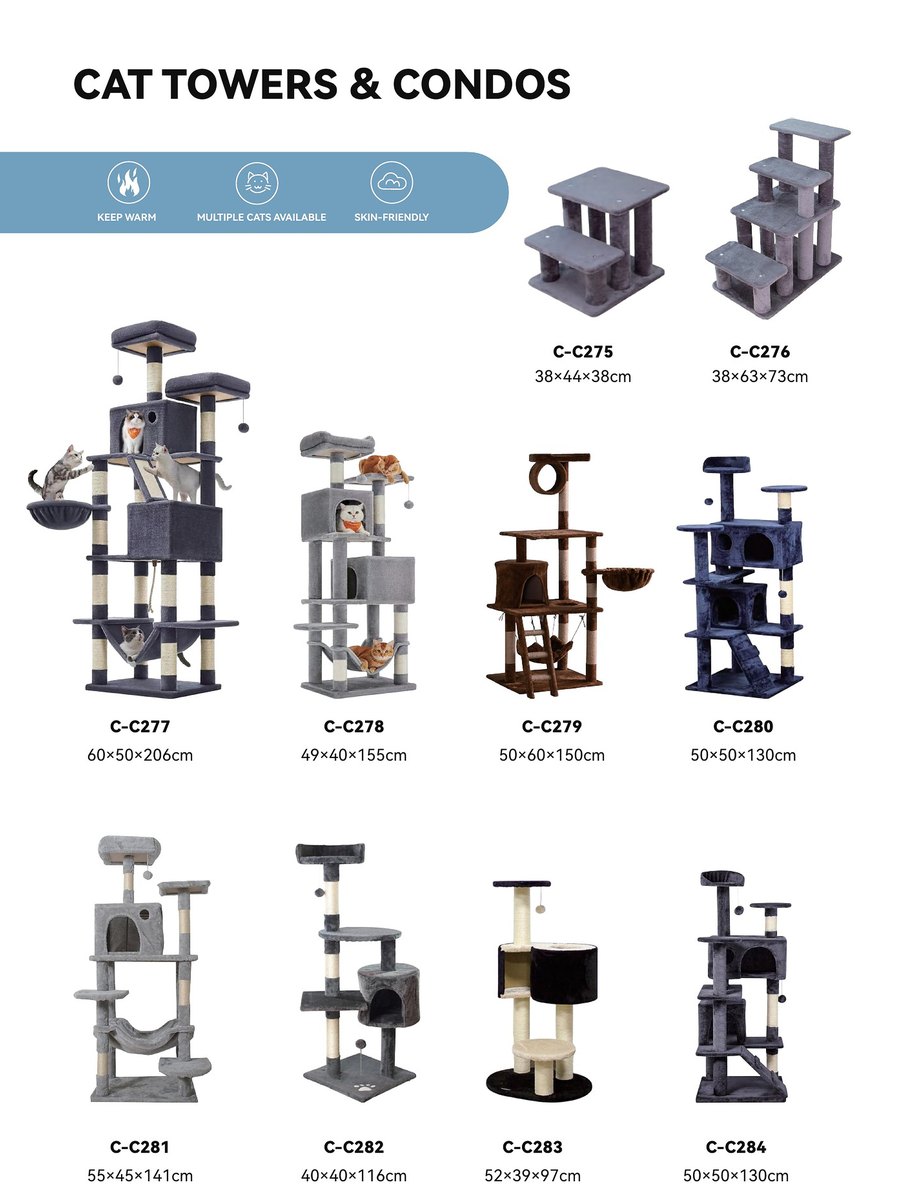
If you are stocking cat trees for a store, building a private-label pet line or sourcing for a shelter, height is one of the first specs your buyers ask about. We recommend carrying at least two sizes: a compact 32–40 inch model for apartments and seniors, and a 60–72 inch model for multi-cat homes and large breeds. Our cat towers and climbers are built with reinforced bases, replaceable sisal posts and skin-friendly platforms — and every design can be customized for dimensions, color and packaging.
PawMivo offers OEM and ODM development, samples before bulk orders, and flexible MOQs by series. Whether you want our existing tower designs with your branding or a custom height range tailored to your market, email us and we will send specs, pricing and lead times within one business day.
Need cat trees for your brand or store?
Custom sizes, colors and private-label packaging — samples available, wholesale MOQs flexible by series.
View Cat Towers Request OEM / ODM Quote