Dog Tennis Balls vs Rubber Balls: A Wholesale Buying Guide
How should buyers compare dog tennis balls and rubber balls?
Compare the intended play use, finished diameter, construction, material specification, packaging and sample evidence—not just the photograph or unit price. Tennis-style balls and molded rubber balls can serve different retail needs, but neither name establishes safety, durability or launcher compatibility. Quote the same specification with each supplier before selecting your private-label range.
For a small pet shop, Shopify brand or Amazon seller, buying wholesale dog tennis balls is an assortment decision as well as a sourcing task. A felt-covered fetch ball, a squeaking ball and a textured rubber ball may look like interchangeable add-ons. Their construction, instructions, pack dimensions and intended use can be very different.
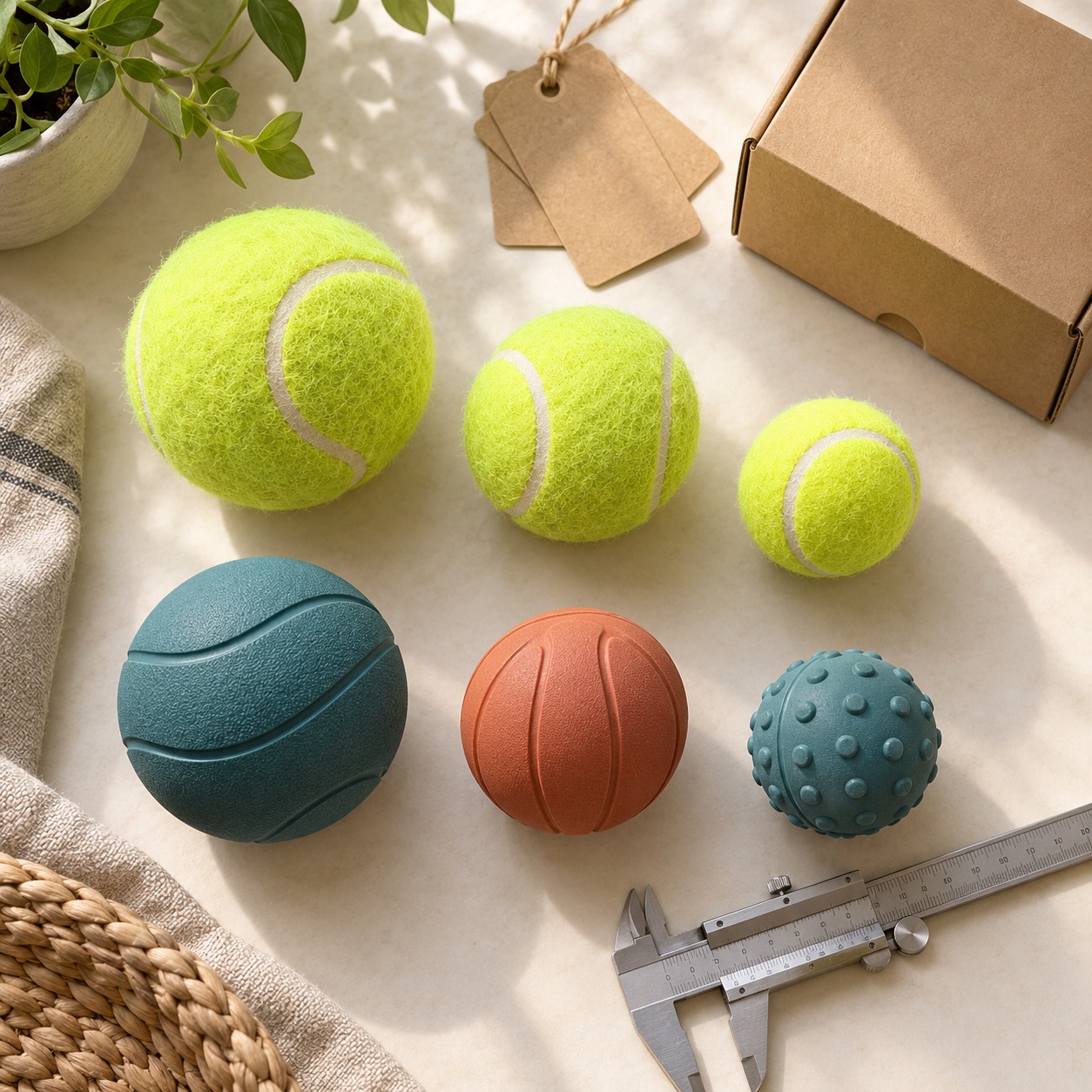
This guide helps you choose which questions to ask before sampling or ordering. Browse actual series in the PawMivo dog ball and fetch catalog; the image below is an illustrative planning scene, not a photograph of available or tested products.
1. Start with a clear use case, not a material winner
Write down who the product is for and how it will be used: supervised fetch in a garden, a specific launcher system, or another stated activity. Do not describe every ball as a dedicated chew toy. If chewing is the main customer need, compare purpose-designed items in the dog chew and treat toy range rather than assuming a fetch ball fills the same role.
APPA's July 2026 Dog Report announcement describes more intentional, value-conscious spending by dog owners. That is broad consumer context, not evidence that tennis-ball searches or rubber-ball sales are rising. For this guide, the practical recommendation is to explain each item's purpose clearly instead of offering many nearly identical products.
2. Compare construction and the buying specification
A material label is a starting point, not a complete specification. A tennis-style item has a covering and an underlying construction to review. Molded balls may differ in compound, wall structure, openings and added components. Ask what the selected SKU actually contains; do not infer composition from color or texture.
| Buying factor | Tennis-style ball: ask about | Molded rubber ball: ask about |
|---|---|---|
| Construction | Covering, core, joints and any sound component | Compound specification, solid or hollow construction and openings |
| Dimensions | Finished diameter and weight, including the covering | Finished diameter and weight, including textured surfaces |
| Intended use | Stated fetch use and model-specific launcher information | Stated fetch or other use; verify any floating or chew claim |
| Finish | Cover attachment, seam consistency and loose material | Molding finish, joints, exposed edges and loose parts |
| Branding | Feasible print location and effect on the covering | Feasible print or molded mark; any tooling change |
| Retail pack | Exact size mix, pack count and instructions | Exact design mix, pack count and instructions |
When comparing quotes, separate the material, feature and branding choices. A higher quote may include a different pack, size or development step. Ask suppliers to identify exclusions and assumptions rather than comparing a single number against an incomplete photo.
3. Keep safety and durability claims specific
VCA Animal Hospitals' chew-toy guidance warns that persistent chewing on an abrasive tennis-ball surface can wear teeth; it also notes that dogs can tear rubber toys apart. It advises supervision, appropriate sizing and retiring damaged toys. These cautions argue against blanket claims that either material is safe for every dog.
KONG's manufacturer guidance likewise advises supervision and says no dog toy is indestructible. Its advice concerns its own products; it is not an endorsement or test result for PawMivo's range.
For your retail artwork, request evidence for terms such as “non-toxic,” “food-grade,” “indestructible,” “dental” or “certified.” Ask which model, materials and test scope the documents cover. Do not transfer a result from one item to an entire assortment or substitute a casual sample check for laboratory testing. This is a sourcing guide, not veterinary advice or a destination-market compliance assessment.
4. Specify size and launcher fit in writing
Do not purchase solely by a label such as small, medium or large. Ask for finished measurements and the supplier's dimensional tolerances, then compare the samples to those specifications. A nominal size does not establish suitability for every dog.
For a launcher-compatible item, name the launcher model and check its current instructions. Confirm the actual ball size and construction rather than assuming every tennis-style product fits. If you sell multiple sizes, make the size easy to identify on the pack, product listing and reorder record.
5. Plan branding and packaging around your sales channel
Independent pet shops
Decide whether the item will hang from a peg, sit in a tray or sell as a boxed multipack. Check that shoppers can identify the size, contents and intended use without opening the pack. A mixed-size bundle needs a clear explanation of its audience; assortment variety alone is not a reason to combine sizes.
Ecommerce and subscription boxes
Request packed dimensions, weight and carton contents before estimating shipping. Review product protection and whether the pack fits your shipping box. Confirm marketplace barcode and packaging requirements in your current seller account before approving artwork; do not assume a factory's standard packaging satisfies every channel.
For private-label dog balls, ask which branding methods are feasible for the existing item. A packaging-only change and a new molded logo can involve different development work. Confirm product minimums and printed-packaging minimums separately; our pet toy MOQ guide explains that distinction.
6. Approve a reference sample and a small, purposeful range
Use a dated specification with the item code, dimensions, composition, color reference, pack contents and artwork revision. Record agreed inspection methods and acceptance criteria. Keep an approved reference sample and require written review of substitutions or construction changes.
As an editorial planning example—not a sales forecast—you could compare one tennis-style fetch item and one molded ball with a distinct purpose, then add sizes only where your customer feedback supports them. Track returns, size questions and reorder demand by item code. A low unit price does not help if the size or pack format creates repeated confusion.
For broader assortment planning, see wholesale dog toys for small businesses. For an original design or changed construction, review the custom dog toy manufacturing brief before assuming existing-design pricing or minimums apply.
7. Send a quote request suppliers can answer
- Item codes or reference design and intended play use.
- Finished diameter, weight requirements and quantity per size and color.
- Material and construction requirements, including any sound feature.
- Logo artwork, placement, single-item or multipack format and pack count.
- Destination market, sales channel, sample requirements and desired arrival date.
- Documents to review, inspection expectations and any specified launcher model.
Ask for a line-by-line response covering sample and development costs, product and packaging minimums, carton information and estimated timing. Confirm which assumptions affect the quote before approving the order.
Dog ball sourcing FAQs
Are tennis balls or rubber balls better for a pet shop?
There is no universal winner. Compare the intended play use, construction, sizes, pack format and supporting instructions for each item. A focused assortment can include both, provided the products serve distinct customer needs and their claims are verified.
Can a sports tennis ball simply be relabeled as a dog toy?
Do not assume that a sports product is appropriate for a pet range. Ask for its intended use, composition, construction and supporting product information, and review the sample and instructions before deciding whether to stock it as a dog toy.
Does natural rubber mean a dog ball is indestructible?
No. A material name does not establish that a ball is indestructible or suitable for every dog. Review the complete construction, size, instructions and evidence for any durability claim, and remove a damaged toy from use.
What should I include in a private-label dog ball quote request?
Provide item codes or a design brief, diameter and weight requirements, quantity by size and color, logo placement, pack contents, destination, sales channel and target arrival date. Ask for product and printed-packaging minimums separately.
Will every dog ball fit a tennis-ball launcher?
No. Confirm the actual ball diameter and construction against the specified launcher model and its instructions. Do not make a universal compatibility claim based only on the words tennis ball.
How should I approve a wholesale dog ball sample?
Compare the sample with a written specification covering dimensions, materials, finish, seams or joints, sound features, artwork, packaging and instructions. Agree any laboratory tests and inspection criteria separately; sample handling alone is not certification.
Sources and editorial scope
Sources checked October 19, 2026. This is an evergreen procurement comparison: no search-volume estimate, market-wide ball trend or PawMivo test result is claimed. The comparison table, quotation checklist and assortment example are editorial recommendations.
- APPA: 2026 Dog Report announcement, July 22, 2026—consumer spending context, not dog-ball demand data.
- VCA Animal Hospitals: How to choose the best chew toy for your dog—veterinary use cautions.
- KONG: manufacturer FAQ—its own sizing and supervision guidance, not endorsement of other products.
Comparing dog balls for your own brand?
Email your item codes, sizes, quantities, logo and pack format, destination and target arrival date. Ask Sweety to confirm the relevant samples, product and packaging minimums, and estimated timing for your request.
Browse Dog Ball & Fetch SeriesEmail Sweety — sweety@pawmivo.com